
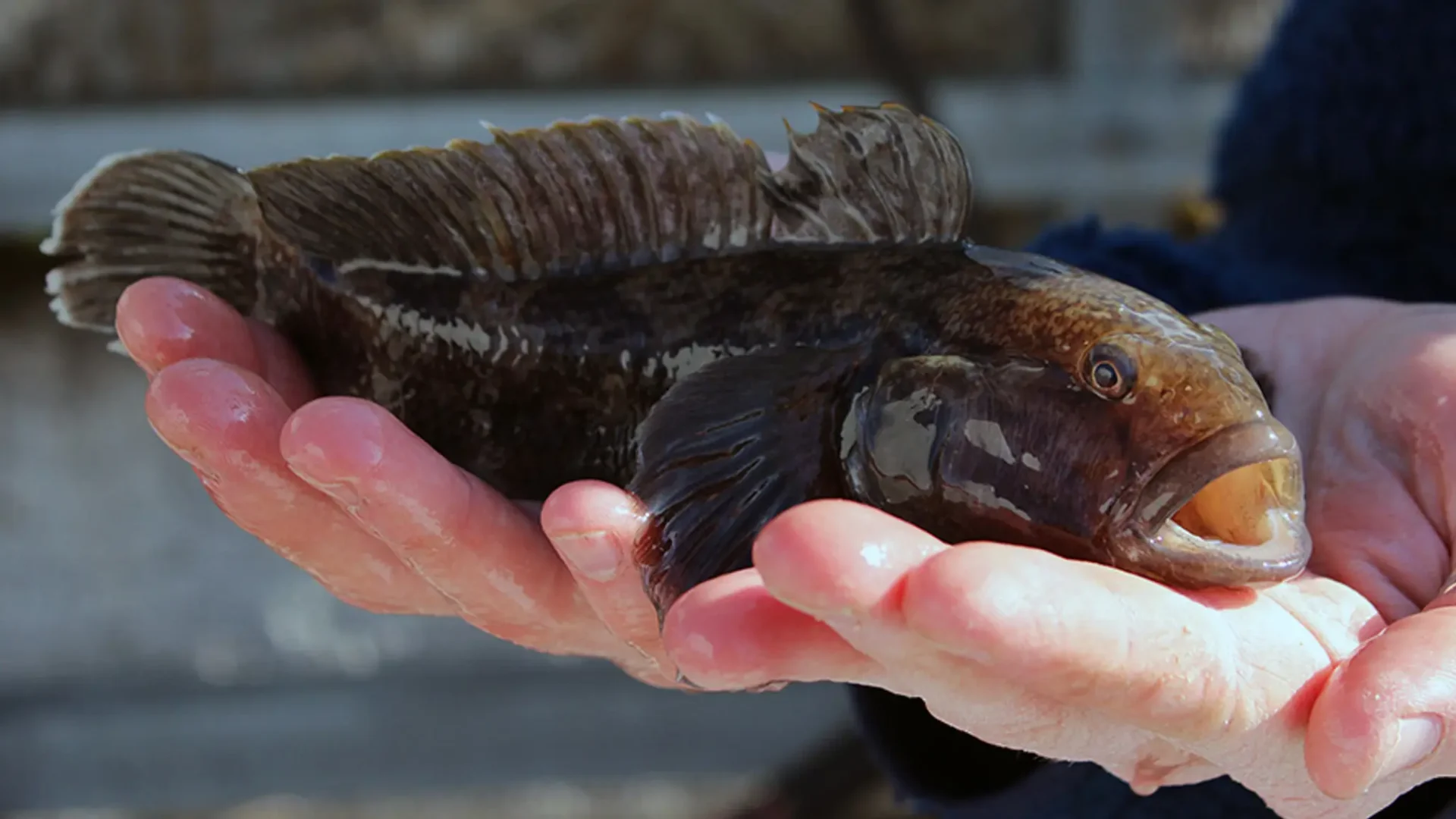
The round goby, an invasive fish originally from the Black Sea and the Caspian Sea, has spread to Swedish waters and is threatening recreational fishing.
Göran Bostedt, professor and researcher at CERE, has, together with colleagues from the Umeå School of Business, Economics and Statistics, and SLU Aqua’s coastal laboratory in Öregrund, modelled the socio-economic effects on future recreational fishing in Sweden using data from the Swedish Statistics Sweden and the Swedish Marine and Water Authority’s recreational fishing survey and estimated the effects of the round goby on other fish species commonly caught by recreational fishers. Values linked to recreational fishing were estimated using the travel cost method. Catches and consumer surplus were compared before and after a 10-year increase in round goby abundance.
The total socio-economic impacts of an unlimited 10-year population increase of the round goby in Swedish waters show that the present value of consumer surplus from recreational fishing would decrease by 379 million Swedish crowns (equivalent to approximately 33 million euros). This means that management measures that maintain the current status quo of the round goby population and that cost less than this would be justified. This study highlights how invasive species in marine environments can cause significant social losses and that proactive management can be cost-effective from a socio-economic perspective.
The study can be found here.